For small and midsize businesses, tracking satisfaction provides valuable insight into customer retention and long-term revenue. Rather than relying on occasional complaints or anecdotal feedback, contact center leaders need consistent ways to evaluate customer experiences and identify areas for improvement.
This guide covers the key customer satisfaction metrics, methods for collecting feedback across channels, and best practices for measuring CSAT. It also explores how contact centers can use these insights to improve agent performance and service quality.
What is customer satisfaction?
Customer satisfaction measures how well a business meets customer expectations during a support interaction or throughout the customer relationship. In a contact center, this includes how quickly agents respond, how effectively they resolve issues, and how easy it is for customers to get help.
Satisfaction with one interaction does not always reflect the overall customer relationship. A customer may appreciate how an agent handles a billing question but still feel frustrated by recurring account issues or unresolved technical problems.
Common indicators of customer satisfaction include:
- Repeat calls: Customers contacting support multiple times about the same issue.
- Call escalations: Interactions requiring supervisor assistance or additional support.
- Customer complaints: Negative feedback about response times, unresolved issues, or service quality.
Agent performance, support processes, and available tools all influence these experiences. Understanding customer satisfaction and how to measure it helps contact center leaders identify which areas need attention.
Why measuring customer satisfaction matters
Tracking customer satisfaction helps businesses identify service issues and understand how support experiences affect long-term relationships. For contact centers, these insights can directly influence:
- Customer retention: Declining satisfaction scores can signal potential churn, giving account managers an opportunity to address concerns before customers leave.
- Brand reputation: Monitoring complaints and negative feedback helps businesses identify service issues before they affect public perception.
- Revenue growth: Retaining existing customers protects recurring revenue and creates opportunities for repeat business and referrals.
- Operational improvements: Satisfaction data helps leaders identify gaps in agent training, staffing, and support processes.
- Customer relationships: Acting on feedback shows customers that their concerns are taken seriously and helps build trust.
Reviewing satisfaction data regularly allows businesses to address problems before they affect more customers. Real-time CSAT tracking can help teams identify service issues and respond more quickly.
Core customer satisfaction metrics you should track
Measuring customer satisfaction requires more than tracking a single score. Contact center leaders should combine customer feedback with operational KPIs to understand service quality, customer loyalty, and potential retention issues.
| Metric | What It Measures |
|---|---|
| Customer Satisfaction Score (CSAT) | Satisfaction with a specific interaction or experience |
| Net Promoter Score (NPS) | Likelihood that customers will recommend a business |
| Customer Effort Score (CES) | How easy it was for customers to resolve an issue |
| First Contact Resolution (FCR) | Percentage of issues resolved during the first interaction |
| Churn Rate | Percentage of customers who stop doing business with a company |
| Average Handle Time (AHT) | Average time agents spend handling customer interactions |
Together, these metrics give leaders a clearer picture of customer experiences and contact center performance. Reviewing them alongside other contact center reporting KPIs helps businesses identify trends and make informed operational decisions.
Customer Satisfaction Score
Customer Satisfaction Score (CSAT) measures how satisfied customers are with a specific interaction, product, or service. Contact centers typically collect this feedback through a short survey after a support interaction, using a five-point scale from Very Unsatisfied to Very Satisfied.
CSAT Formula: Satisfied Responses ÷ Total Responses × 100
Satisfied responses typically include ratings of 4 or 5. A higher score indicates greater customer satisfaction.
Net Promoter Score
Net Promoter Score (NPS) measures customer loyalty and their likelihood of recommending a business. Customers answer a recommendation question on a scale of 0 to 10, placing them into three categories:
- Promoters (9–10): Loyal customers likely to recommend the business.
- Passives (7–8): Satisfied customers who may consider competitors.
- Detractors (0–6): Unhappy customers who may discourage others from choosing the business.
NPS Formula: % Promoters − % Detractors
Scores range from -100 to +100, with higher scores generally indicating stronger customer loyalty.
Customer Effort Score
Customer Effort Score (CES) measures how easy it is for customers to resolve an issue or get support. It helps identify friction points such as long wait times, repeated transfers, or having to explain the same issue multiple times.
Contact centers typically measure CES through surveys asking customers to rate how easy their experience was.
CES Formula: Total Effort Ratings ÷ Number of Responses
The scoring direction depends on the survey scale. Tracking CES helps leaders identify processes that make it harder for customers to get help.
First Contact Resolution
First Contact Resolution (FCR) measures the percentage of customer issues resolved during the first interaction, without requiring follow-up support.
FCR Formula: Issues Resolved on First Contact ÷ Total Issues × 100
A higher FCR rate generally indicates that agents have the resources and training to resolve issues efficiently. Reviewing FCR alongside churn and Average Handle Time (AHT) can help leaders identify opportunities to improve staffing, coaching, and queue management.
Methods to measure customer satisfaction across channels
Customer satisfaction extends beyond phone calls. Contact centers should gather feedback across voice, email, web chat, and SMS to understand the full customer experience.
Common measurement methods include:
- Transactional surveys: Collect feedback immediately after a call, chat, or support ticket is resolved.
- Relationship surveys: Measure overall satisfaction and loyalty through periodic surveys.
- Call and chat analytics: Review recordings and transcripts to identify customer sentiment, recurring complaints, and coaching opportunities.
- Social listening and online reviews: Monitor public feedback for recurring concerns and unprompted opinions.
- Customer interviews: Gather direct feedback about customer experiences and expectations.
- Customer behavior data: Track churn, repeat contacts, retention, and complaints to identify potential satisfaction issues.
Small and midsize contact centers don’t need to invest in a large collection of new tools to get started. Existing phone system reports, ticketing data, and post-interaction surveys can provide a useful foundation.
Combining these sources helps leaders understand what’s affecting customer satisfaction and where improvements are needed. Learn more about measuring customer experience to see how businesses can use these insights to improve support.
Common pitfalls when measuring customer satisfaction
Measuring customer satisfaction is only useful when the data is accurate and put into context. Contact centers should avoid these common mistakes:
- Relying on one metric: A high CSAT score doesn’t tell the whole story. Review satisfaction alongside operational metrics like FCR, AHT, and repeat contacts.
- Surveying too often: Sending too many surveys can lead to survey fatigue, lower response rates, and less reliable feedback.
- Ignoring qualitative feedback: Customer comments and frontline agent input can reveal issues that scores alone may not capture.
- Setting targets without context: Focusing too heavily on individual metrics can encourage behaviors that hurt the customer experience. For example, agents may rush calls to meet AHT targets at the expense of resolving customer concerns.
A balanced approach to measurement helps contact center leaders make better decisions without overlooking the factors that influence customer satisfaction.
Best practices for implementing CSAT tools
Effective CSAT tools make it easier to collect useful feedback and turn results into action. Keep these best practices in mind when setting up customer satisfaction surveys:
- Keep surveys short: Limit transactional surveys to one or two questions, such as a rating scale followed by an optional comment box. Longer surveys can discourage customers from responding.
- Use neutral language: Avoid leading questions like, “How much did you love our support today?” Instead, ask, “How satisfied were you with your experience today?”
- Optimize for mobile: Make surveys easy to complete on smartphones. Complicated layouts, excessive scrolling, or the need to zoom can cause customers to abandon them.
- Connect your data: Integrate CSAT tools with your CRM, helpdesk, or contact center software. This allows account managers and support teams to view satisfaction scores alongside customer history and identify issues before they lead to churn.
Track customer experience with Xima Software
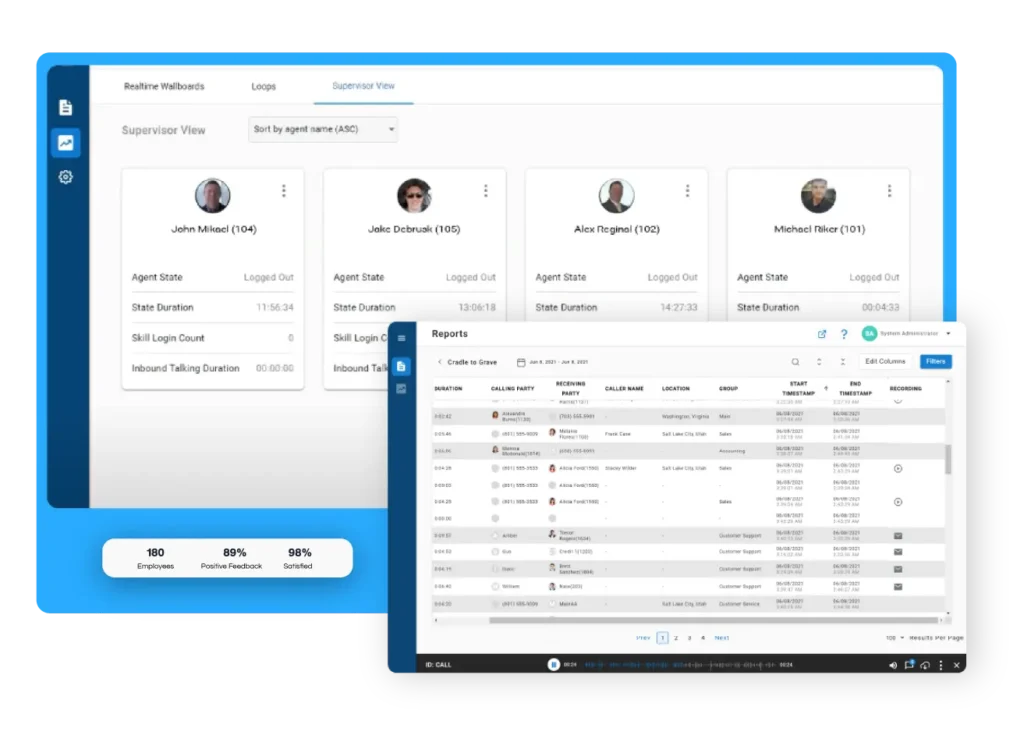
Measuring customer satisfaction is easier when contact center leaders have the right reporting tools. Xima Software helps businesses track contact center performance, visualize key metrics, and monitor agent productivity and CSAT trends through customizable dashboards.
With reporting and analytics in one place, teams can identify service gaps, evaluate performance, and make more informed decisions about the customer experience.
Book a demo of Xima Software to explore its reporting capabilities and see how your team can turn contact center data into actionable insights.
FAQs About Measuring CSAT
A CSAT score of 75% or higher is generally considered good, though benchmarks vary by industry. Businesses should also track their own scores over time to identify trends and areas for improvement.
Use short transactional surveys after support interactions and broader relationship surveys periodically, such as quarterly. Consistent measurement helps identify changes in customer sentiment over time.
AI tools can analyze call transcripts, customer sentiment, and feedback to identify recurring issues and satisfaction trends. They can also help contact centers spot service gaps and improve agent coaching.
Yes. Contact centers can use call analytics, customer reviews, complaint trends, repeat contacts, and churn data to identify potential satisfaction issues. However, direct customer feedback provides important context that operational data alone may miss.
CSAT is the most direct measure of customer satisfaction, but it should be reviewed alongside First Contact Resolution (FCR) and Customer Effort Score (CES). Together, these metrics provide a clearer picture of support quality and the customer experience.