Every contact center has a busy season. For a lot of teams, it’s the same few months.
Healthcare teams are in the middle of open enrollment. Financial services teams are closing out the year and getting ready for tax season. Field service teams are watching the forecast and waiting for the first hard freeze. Different reasons, same result: the phones get a lot busier between December and March.
The good news is that you can see it coming. You may not know exactly how hard the spike will hit, but you know roughly when. That gives you time to decide now what happens when the queue starts to back up, instead of figuring it out live with callers on hold.
This guide covers the four things that matter most: overflow routing, callbacks, after-hours coverage, and staffing. If you want a hands-on list to work through with your team, our Contact Center Surge Readiness Checklist breaks it into 20 items you can check off.
Why Surges Hurt More Than the Numbers Suggest
A 40% jump in calls doesn’t just mean 40% more work. It tends to set off a chain reaction.
Hold times go up. Some callers hang up and try again, so the same person now shows up in your volume two or three times. Agents rush to clear the queue, which can lead to more mistakes and more repeat calls. And when a spike ends, there’s often a second wave over the next day or two from people who couldn’t get through the first time.
Meanwhile, the people answering the phones are the same people who are tired from the last stretch. Burnout during peak season is real, and it shows up in quality, attendance, and turnover.
That’s why surge planning isn’t only about handling more calls. It’s about keeping that chain reaction from starting.
Overflow Routing: Decide Your Tipping Point Ahead of Time
Overflow routing sends calls to a backup group when your main queue gets too full. The key is setting the rule before you need it.
Start by picking a trigger. Most teams use one of these:
- Wait time: for example, any caller waiting longer than 90 seconds moves to the backup group.
- Queue length: for example, once 10 or more callers are waiting.
- Available agents: for example, when fewer than two agents are free.
Then decide who the backup group is. It might be a second team, supervisors, cross-trained staff from billing or scheduling, or another location in a different time zone. Whoever it is, they need to know they’re on the overflow list before the busy season starts, not the morning it does.
Finally, test it. Make a few test calls when the queue is full and confirm they land where you expect. A routing rule that’s never been tested is a guess.
Callbacks: Let Callers Keep Their Place Without Waiting
Callbacks may be the single most useful tool during a surge. Instead of sitting on hold, the caller gets an offer: hang up, keep your place in line, and we’ll call you back.
That helps in three ways. Callers aren’t stuck on hold, so fewer of them give up. Your queue looks shorter and calmer. And you spread calls into slower parts of the day, when agents have time to return them.
A few things make callbacks work well:
- Offer it at the right moment. Once wait times pass a set point, not the second someone calls.
- Set clear expectations. Tell callers roughly when they’ll hear back.
- Have someone own the follow-up. Callbacks that never get returned are worse than no callback offers at all.
- Watch your callback count. If it keeps growing through the day, that’s a sign you need more people on the phones, not just more callbacks.
Callbacks don’t have to be small, either. One Xima customer in pest control handled more than 72,000 calls, 3,100 callbacks, and 1,800 chats in its first 90 days on a single platform. Read the pest control story.
After-Hours Coverage: Don’t Let Calls Go to a Voicemail Nobody Checks
Surges don’t stop at 5 p.m. A burst pipe at 9 p.m., a billing question late on a Sunday, or a patient trying to finish enrollment before a deadline will all hit after the office closes.
If those calls go to a general voicemail box that nobody reviews until Monday morning, you start the week with a backlog and a lot of frustrated customers.
A few better options:
- On-call routing. Send urgent calls to an on-call person or team after hours.
- Follow the sun. If you have staff in another time zone, route late calls to them.
- Clear callback promises. If no one can answer, tell callers exactly when they’ll hear back, and then do it.
- Holiday schedules. Update greetings and routing for every holiday in the season, not just the big ones. A missed holiday schedule is one of the easiest ways to lose a day of calls.
Staffing: Plan From Your Own Data, Not a Guess
The best predictor of your next busy season is your last one. Pull last year’s call volume by day and by hour for December through March. Look for your heaviest days, the hours that spike, and the call types that grow the most.
Then plan for those peak days, not the monthly average. A month that looks manageable on paper can still have three days that overwhelm your team.
A few more things to build in:
- Expect more absences. Illness and time off tend to rise during the winter months. Plan a little extra coverage for that.
- Set time-off freeze dates early. Let your team know which weeks are off limits for vacation so nobody is surprised.
- Don’t count on new hires alone. New agents take weeks to get up to speed, so hiring in December won’t help much in December. Cross-training current staff is often faster.
- Spread the load. Rotate overflow duty so the same people aren’t carrying every spike.
Watch It Live So You Can Move People Mid-Spike
Even the best plan needs adjusting once the calls start. That’s where real-time visibility matters.
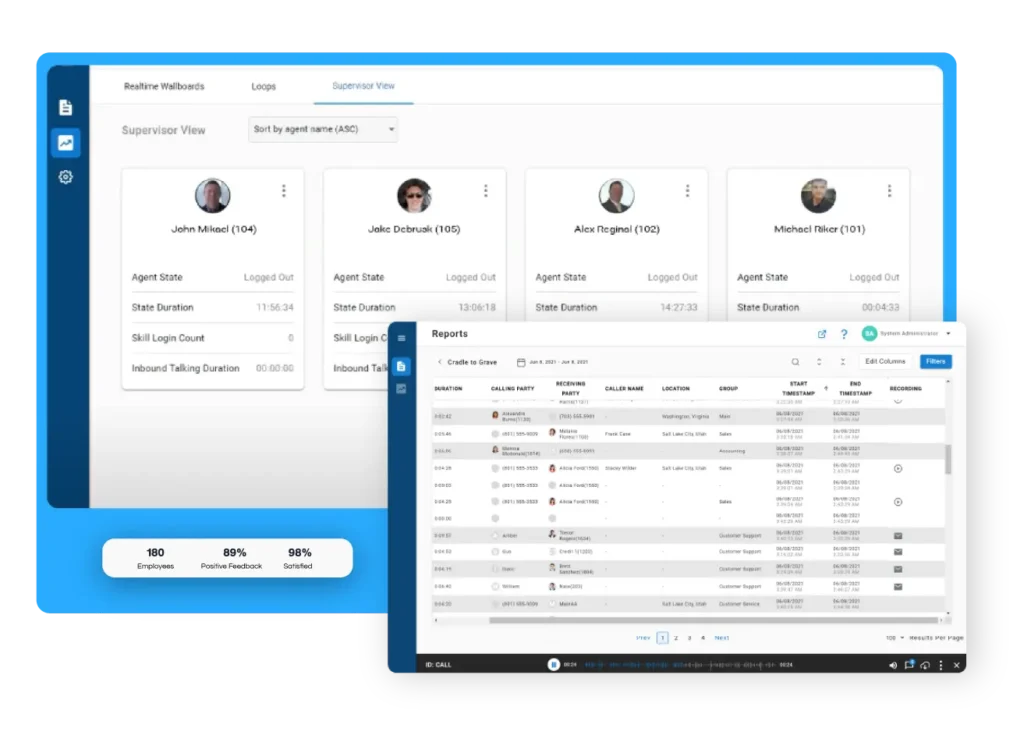
Wallboards and live dashboards show your queue, wait times, and available agents as they happen. Alerts can flag when wait times pass your limit or the callback list starts to grow. That lets a supervisor move people around in the moment instead of reading about the problem in tomorrow’s report.
If you’re not sure which numbers to put on the wall, start with calls waiting, longest wait, agents available, and callbacks pending. Our guide to real-time wallboard metrics goes deeper.
What This Looks Like by Industry
The approach is the same everywhere, but the timing and the call reasons change.
Industry | When the surge hits | What drives it | Where to focus first |
Healthcare | November through January | Open enrollment, plan changes, new-year benefit questions | Callbacks and clear wait-time messaging |
Financial services | December through April | Year-end statements, tax forms, account questions | Overflow routing and cross-trained backup staff |
Field services | December through March | Winter storms, frozen pipes, heating failures | After-hours coverage and urgent-call routing |
Healthcare teams often deal with long, detailed calls, so callbacks help keep hold times from stretching out. Financial services teams see a long, steady climb into tax season, which makes backup staff and overflow rules important. Field service teams can go from quiet to overwhelmed in a single night when a storm hits, so after-hours routing matters most.
Start Now, Not in December
The teams that get through the busy season well usually start getting ready six to eight weeks ahead. That’s enough time to pull last year’s numbers, set up and test routing rules, brief the backup team, and update holiday schedules before the first spike.
If you want a simple way to see where you stand, work through the Contact Center Surge Readiness Checklist with your team. It takes about 20 minutes and shows you exactly what still needs to be done.
Frequently Asked Questions
When should a contact center start planning for year-end and Q1 call spikes?
Ideally six to eight weeks before the spike starts. That leaves time to review last year’s data, set and test overflow rules, cross-train backup staff, and update holiday schedules.
What is overflow routing in a contact center?
Overflow routing automatically sends calls to a backup group when your main queue passes a set limit, such as a maximum wait time or a number of callers waiting.
Do callbacks actually reduce abandoned calls?
Yes. When callers can keep their place in line without waiting on hold, fewer of them hang up. Callbacks also spread calls into slower parts of the day.
How should we handle calls that come in after hours during peak season?
Route urgent calls to an on-call person or another time zone, and give everyone else a clear promise of when they’ll hear back. Avoid sending calls to a general voicemail that nobody checks until the next business day.
How do we forecast staffing for a seasonal spike?
Use your own call volume from last year, broken down by day and hour. Plan for your heaviest days rather than the monthly average, and add extra coverage for the higher absence rates that usually come with winter.