
Customer conversations contain more information than a traditional call report can capture. A customer may get an answer quickly but leave frustrated. Another may begin a call upset and end it satisfied. AI sentiment analysis tools help contact center leaders see those differences across far more interactions than a supervisor could reasonably review by hand.
These tools use technologies such as natural language processing (NLP) and machine learning to evaluate language, tone, context, and other signals. Depending on the platform, they can identify positive, neutral, or negative sentiment, detect specific emotions, surface recurring topics, and alert supervisors when an interaction needs attention.
For contact centers, the value goes beyond measuring how customers feel. Sentiment data can support quality assurance, agent coaching, compliance monitoring, and real-time intervention. It also gives operations leaders another layer of context for understanding why metrics such as first call resolution, CSAT, or escalation rates are changing.
The right tool depends heavily on the job. Some platforms analyze live customer calls as part of a broader contact center system. Others specialize in written feedback, social media, surveys, or developer-built applications. This guide compares eight AI sentiment analysis tools across those different use cases.
What Is an AI Sentiment Analysis Tool?
An AI sentiment analysis tool evaluates spoken or written language to determine the attitude or emotion behind it. Basic systems classify interactions as positive, negative, or neutral. More advanced platforms can identify degrees of sentiment, individual emotions, customer intent, and the particular topic causing a reaction.
In a contact center, that could mean identifying rising frustration during a billing call and alerting a supervisor before the customer escalates. Across hundreds of conversations, the same technology can uncover a pattern of negative reactions to a particular policy or process.
Common capabilities include:
- Polarity scoring: Classifies language as positive, neutral, or negative, sometimes with more granular levels within each category.
- Emotion detection: Looks for emotions such as frustration, satisfaction, anger, urgency, or confusion.
- Aspect-based analysis: Connects sentiment to a particular subject. A customer could be happy with an agent’s service while being unhappy with a product or price.
- Intent detection: Identifies what the customer appears to want, such as canceling an account, making a purchase, or requesting help.
- Voice analysis: Adds spoken cues to the analysis rather than relying exclusively on written text.
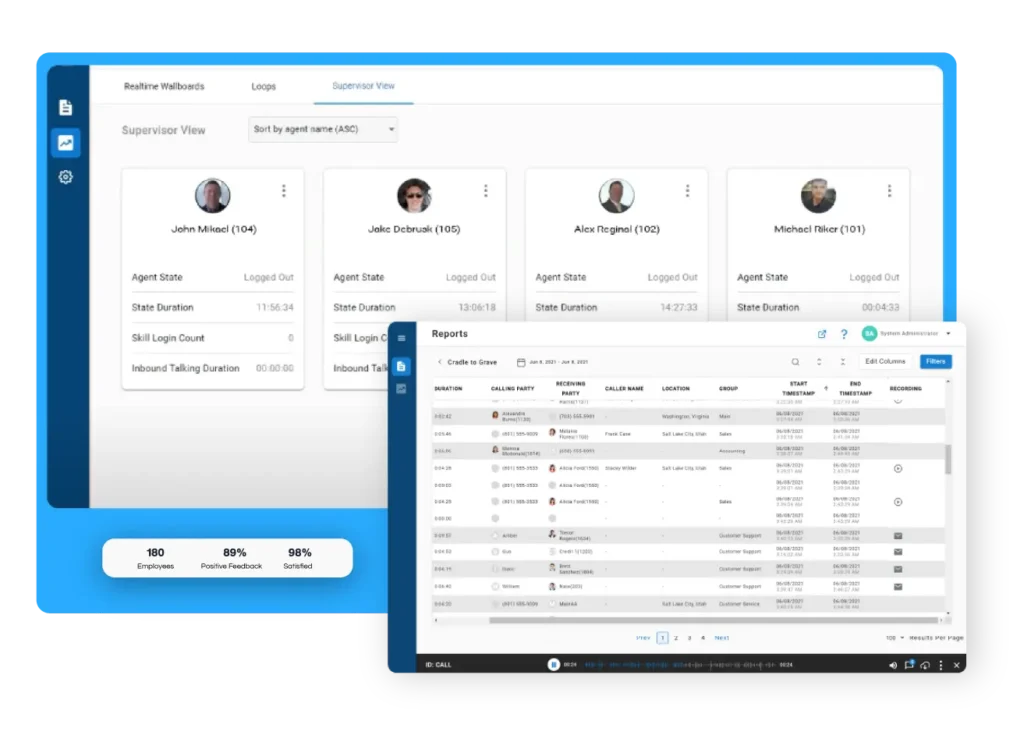
For supervisors, those insights become much more useful when they are connected to the rest of the interaction. Xima, for example, uses sentiment as part of broader contact center speech analytics rather than treating a sentiment score as an isolated metric.
Sentiment data can also help managers understand how sentiment analysis affects agent performance and where coaching is likely to have the greatest impact. On the customer side, tracking changes in emotion across conversations can reveal where sentiment is affecting the customer experience.
Top AI Sentiment Analysis Tools: A Quick Comparison
|
Tool |
Primary Use Case |
Channels Analyzed |
Best Suited For |
|
Xima CCaaS |
Contact center sentiment, QA, and performance visibility |
Voice and digital contact center interactions |
Support and sales contact centers |
|
Dialpad AI |
AI-powered calling and live sentiment monitoring |
Voice and digital communications |
Distributed business communications teams |
|
Lexalytics (InMoment) |
NLP and unstructured text analytics |
Reviews, surveys, social data, support text |
Data science and research teams |
|
Qualtrics XM Discover |
Voice of Customer and experience analytics |
Surveys, support interactions, social and conversational data |
Enterprise CX teams |
|
Azure AI Language |
Developer-built NLP applications |
Text |
Developers and data teams |
|
MonkeyLearn |
No-code text classification |
Reviews, tickets, surveys, and other text |
Non-technical teams analyzing written feedback |
|
Talkdesk |
Contact center interaction analytics |
Voice and digital channels |
Mid-market and enterprise contact centers |
|
Brand24 |
Brand and social sentiment monitoring |
Social media, news, forums, and online mentions |
Marketing and PR teams |
The 8 Best AI Sentiment Analysis Tools
1. Xima CCaaS
Best for: Contact centers that want sentiment analysis connected directly to call management, QA, reporting, and supervisor visibility.
Xima approaches sentiment analysis as part of the contact center operation itself. Its Speech Analytics uses AI transcription and machine learning to analyze customer conversations, including the words and phrases used as well as acoustic information. Interactions can then be classified and reported with positive, neutral, and negative sentiment data.
For supervisors, that means sentiment does not live in a separate analytics application. It can be considered alongside interaction history, agent performance, quality scores, and other operational data. This is particularly useful when a manager sees a performance issue and needs to understand what happened during the underlying calls.
Xima also pairs AI analysis with Cradle-to-Grave reporting, Auto QA, and real-time visibility. Instead of manually selecting a handful of calls for review, teams can analyze interaction data at scale and use the results to find coaching opportunities or potential compliance issues.
Another advantage for organizations with an existing communications environment is Xima’s ability to work with UC platforms such as RingCentral, Webex, and Avaya Cloud Office. That gives teams a path to deeper contact center analytics without treating sentiment analysis as an isolated tool.
Key strengths:
- AI-powered speech transcription and sentiment analysis
- Automated QA and interaction scoring
- Cradle-to-Grave interaction visibility
- Real-time reporting and supervisor visibility
- Contact center performance and coaching insights
- Integration with existing communications environments
Considerations: Xima is built around contact center operations. A company looking only to monitor public social media conversations or analyze product reviews would likely need a tool designed specifically for those purposes.
2. Dialpad AI
Best for: Distributed teams that want business calling, contact center functionality, and real-time AI features in one communications platform.
Dialpad combines its communications platform with native AI capabilities. Its sentiment analysis is particularly relevant for customer support teams because conversations can be transcribed and analyzed while calls are still taking place.
Managers can use that live sentiment information to identify conversations that appear to be deteriorating. They can then review the interaction and decide whether an agent needs assistance. Dialpad also provides real-time agent guidance and post-call AI capabilities, creating a broader workflow around conversation intelligence.
That makes Dialpad a strong fit for organizations looking for an all-in-one calling environment rather than a standalone sentiment analysis application.
Key strengths:
- Live call transcription
- Real-time sentiment tracking
- AI-assisted agent guidance
- Calling and contact center capabilities in the same ecosystem
Considerations: Businesses that already have a communications environment they intend to keep should evaluate how a move to a broader all-in-one platform fits their existing technology strategy.
3. Lexalytics (InMoment)
Best for: Enterprise data, research, and customer experience teams working with large amounts of unstructured text.
Lexalytics takes a different approach from contact-center-first platforms. Its focus is NLP and text analytics across sources such as surveys, reviews, social media, support tickets, and other written customer feedback.
The platform can extract sentiment, intent, entities, and other information from unstructured language. That makes it useful when a business needs to understand customer opinions across a large body of text rather than monitor a live queue of customer calls.
For research teams, this broader text-analysis orientation can be an advantage. It provides a way to turn qualitative customer feedback into structured information that can be analyzed at scale.
Key strengths:
- NLP and machine learning
- Sentiment and intent analysis
- Entity recognition and categorization
- Processing of large unstructured text datasets
Considerations: Contact centers primarily interested in live voice analysis should compare its workflow with platforms designed specifically around real-time call operations.
4. Qualtrics XM Discover
Best for: Enterprise CX and Voice of Customer teams that need to understand sentiment across many customer touchpoints.
Qualtrics XM Discover sits within a broader experience management approach. Rather than focusing exclusively on calls, it brings together customer feedback and interaction data from sources such as surveys, support channels, social conversations, and contact center data.
That wider view can help enterprise CX teams determine whether the same customer issues appear across multiple parts of the journey. Sentiment can then be viewed alongside other experience data instead of being limited to a single support channel.
For organizations with established Voice of Customer programs, this breadth can be valuable. Teams can analyze trends at an organizational level rather than focusing exclusively on individual agent interactions.
Key strengths:
- Broad customer experience analytics
- Voice of Customer analysis
- Cross-channel data aggregation
- Enterprise dashboards and reporting
Considerations: Smaller contact center teams that mainly need live agent and queue visibility may not require the breadth of a full enterprise experience management platform.
5. Azure AI Language (Text Analytics)
Best for: Development and data teams building sentiment analysis into custom applications.
Azure AI Language provides NLP services that developers can incorporate into their own software and analytics workflows. Its text analytics capabilities can identify sentiment and perform opinion mining on written data.
This makes Azure different from a packaged contact center application. A technical team can use the service as one component within a custom customer analytics environment, connecting sentiment output to internal databases, dashboards, or applications.
For companies already invested in Microsoft’s cloud ecosystem, this flexibility may be useful when off-the-shelf workflows do not match internal requirements.
Key strengths:
- Pre-built NLP capabilities
- Sentiment and opinion analysis
- Microsoft cloud integration
- Flexibility for custom development
Considerations: Azure AI Language provides building blocks rather than a ready-to-run contact center workflow. Organizations may need development resources to turn the technology into the reporting, alerts, QA processes, and supervisor tools they need.
6. MonkeyLearn
Best for: Non-technical teams that want to classify and analyze written customer feedback.
MonkeyLearn is centered on text analysis and offers a more accessible approach for teams that do not want to build NLP models from scratch. Users can work with pre-trained sentiment models or create customized text classification workflows.
A support manager might use the platform to analyze customer tickets, survey responses, or other written feedback and identify common themes or shifts in sentiment. Integrations with help desk and workflow tools can also help teams incorporate analysis into existing processes.
Key strengths:
- No-code text analysis
- Pre-trained sentiment models
- Custom text classification
- Integrations with common support tools
Considerations: Teams focused on live customer calls should distinguish text sentiment analysis from platforms that also analyze spoken conversations and acoustic signals.
7. Talkdesk
Best for: Mid-market and enterprise contact centers looking for sentiment and interaction analytics within a larger contact center platform.
Talkdesk incorporates interaction analytics into its contact center ecosystem. Its tools can help organizations evaluate customer conversations across voice and digital channels, identify sentiment and interaction patterns, and connect those findings with quality and coaching workflows.
For managers, the value comes from having customer emotion and agent performance data available within a broader contact center environment. Instead of looking only at aggregate queue statistics, teams can investigate what occurred inside the conversations driving those results.
Key strengths:
- Voice and digital interaction analytics
- Automated interaction analysis
- Sentiment and mood tracking
- QA and coaching workflows
Considerations: Smaller teams should evaluate how much of a larger contact center platform they actually need, particularly if they already have communications infrastructure they want to preserve.
8. Brand24
Best for: Marketing and public relations teams monitoring brand sentiment online.
Brand24 is the outlier on this list because its primary focus is public brand monitoring rather than contact center conversations. It tracks online mentions across sources such as social media, news, blogs, forums, and other digital channels.
The platform applies sentiment analysis to those mentions, helping marketing teams understand whether conversations about a company or product are trending positively or negatively. That makes it useful for reputation management, campaign monitoring, and identifying public conversations that may need attention.
Key strengths:
- Social listening
- Brand mention monitoring
- Positive, negative, and neutral sentiment classification
- Reputation and marketing analytics
Considerations: Brand24 serves a different purpose from contact center sentiment software. A customer service team looking to analyze live agent calls, QA performance, or queue-level trends will need capabilities designed specifically for contact center interactions.
Common Types of AI Sentiment Analysis
There is no single method for interpreting customer emotion. Different types of sentiment analysis answer different questions, and contact centers may use several approaches together.
Fine-Grained Sentiment Analysis
Fine-grained sentiment analysis adds more detail to basic positive and negative classifications. A common scale includes very positive, positive, neutral, negative, and very negative.
For a supervisor, that distinction can help prioritize attention. Ten negative calls may not require the same response if two show mild dissatisfaction while another contains a sharp decline into strongly negative sentiment.
Emotion Detection
Emotion detection attempts to identify a more specific emotional state rather than simply assigning polarity. Depending on the system, that may include frustration, anger, confusion, urgency, or satisfaction.
In voice conversations, this analysis may consider both the language being used and acoustic characteristics. Xima’s speech analytics software combines transcription, classification, sentiment scoring, and interaction analysis so supervisors can put those signals into a broader operational context.
Aspect-Based Sentiment Analysis
A single conversation can contain conflicting opinions. A customer might be pleased with an agent’s help but unhappy about pricing.
Aspect-based sentiment analysis separates those ideas and associates the sentiment with the relevant topic. This makes the result more useful than labeling the entire conversation simply “positive” or “negative.”
Across a large number of interactions, those distinctions can uncover recurring product, billing, service, or policy issues that would otherwise be buried inside transcripts.
Intent Analysis and Urgency Detection
Intent analysis focuses on what the customer appears to want to do next. That could include canceling an account, making a purchase, requesting technical support, or escalating to a supervisor.
When intent is combined with sentiment, the context becomes much clearer. A customer asking about cancellation with strongly negative sentiment, for example, may deserve different treatment from someone neutrally asking about cancellation terms.
How AI Sentiment Analysis Works
Sentiment analysis takes unstructured customer conversations and turns them into information that teams can search, compare, and act on. The exact workflow differs by platform, but most systems follow several core stages.
Data Ingestion and Speech Transcription
The system first needs usable interaction data. Written channels such as chat, SMS, email, tickets, surveys, and reviews can be analyzed directly as text.
Voice requires another step. Automatic speech recognition converts recorded or live calls into transcripts. The quality of that transcription matters because an incorrectly captured phrase can change how the interaction is interpreted.
In a contact center environment, this process becomes particularly valuable when it runs across the full interaction set rather than a small group of calls selected for manual review.
Natural Language Processing and Acoustic Analysis
Once the language is available for analysis, NLP models examine words, phrases, syntax, context, and relationships between ideas.
Voice analysis can add another layer by considering how something was said. Volume, pace, pitch, pauses, silence, and overlapping speech may all provide context that text alone cannot capture.
The combination matters because identical words can carry very different meanings. “That’s great” could express genuine satisfaction or obvious frustration depending on the conversation around it and how the customer says it.
Automated Scoring and Alert Triggers
The system then converts its analysis into structured results. That may include a positive, neutral, or negative classification, a numerical score, specific emotions, topics, or changes in sentiment throughout the interaction.
Contact centers can use thresholds to make those results actionable. If an active conversation becomes sharply negative, for example, the platform may flag it for supervisor attention. Historical sentiment scores can also be grouped by agent, queue, issue, product, or time period to expose patterns that are difficult to see one call at a time.
Key Features to Look for in an AI Sentiment Analysis Tool
The longest feature list is not necessarily the most useful one. Contact center leaders should start with the conversations they need to understand and the decisions they expect supervisors to make from the data.
- Voice and text processing: Determine whether the system analyzes only transcripts or can also interpret spoken characteristics such as tone and pacing. Contact centers with heavy phone volume should make voice analysis a priority.
- Real-time and post-interaction scoring: Live sentiment can help supervisors respond to difficult calls as they happen. Historical analysis serves a different purpose by exposing trends across days, weeks, or months. Many teams will benefit from both.
- Automated QA integration: Sentiment becomes more useful when it connects to quality scores, coaching, compliance criteria, and interaction history. Otherwise, managers may end up with another dashboard that requires manual interpretation.
- Phone system and CRM compatibility: Confirm how the platform works with your current communications and customer data systems. A useful analytics platform should improve visibility without creating unnecessary technical work or additional data silos.
Accuracy should also be tested with real interactions from your business. Dialects, negation, industry terminology, sarcasm, background noise, and unusual phrasing can all affect how a model interprets a conversation. A pilot using representative customer calls can tell you far more than a polished feature list.
Track and Improve Customer Sentiment with Xima CCaaS
Sentiment is most useful when a supervisor can connect it to what actually happened during an interaction.
Xima brings Speech Analytics, sentiment analysis, Auto QA, real-time reporting, and Cradle-to-Grave visibility into the contact center workflow. Speech Analytics transcribes interactions and evaluates sentiment, while reporting helps teams connect those findings to agent performance and customer experience.
That gives managers more than a list of negative calls. They can identify recurring customer issues, find coaching opportunities, monitor interaction quality, and investigate the events behind a performance change without stitching together separate reports.
For teams using platforms such as RingCentral, Webex, or Avaya Cloud Office, Xima can also add contact center intelligence while working with existing communications infrastructure. The goal is to give supervisors a clearer view of customer conversations without creating another layer of unnecessary complexity.
Request a personalized Xima demo to see how sentiment tracking, Speech Analytics, Auto QA, and real-time reporting work together.
FAQs About AI Sentiment Analysis
Accuracy varies based on the model, the quality of the source data, the type of conversation, and the language being analyzed. Contact centers should test sentiment tools against representative calls and use the results alongside human judgment, particularly for complex or high-risk interactions.
Advanced tools can use context and, for voice conversations, acoustic signals to interpret language more accurately than simple keyword-based systems. Sarcasm, slang, dialects, and ambiguous phrasing can still be difficult for AI models, so sentiment scores should not be treated as infallible.
Sentiment analysis may be useful if your team handles enough customer conversations that supervisors cannot manually understand what is happening across them. It is particularly valuable when managers need faster visibility into escalations, customer frustration, recurring complaints, agent coaching needs, or quality trends.
Yes. Free and limited sentiment analysis tools are available, particularly for basic text classification. Contact centers should evaluate whether a free tool can handle their required channels, volume, privacy requirements, integrations, reporting, and voice analysis before relying on it for operational decisions.
Sentiment analysis focuses on identifying the attitude or emotion expressed in an interaction. Speech analytics is broader. It can turn calls into structured data and analyze topics, phrases, sentiment, agent behavior, compliance criteria, and other conversation signals. Sentiment analysis can therefore be one capability within a larger speech analytics platform.