For contact center supervisors and operations managers, burnout creates challenges that extend beyond employee well-being. Exhausted agents may struggle to maintain service quality, leading to longer handle times, missed details, increased absenteeism, and higher turnover. Those problems can quickly affect customer satisfaction and operating costs.
Preventing call center burnout requires managers to understand what causes it, recognize the warning signs, and address the working conditions contributing to employee stress. The right combination of staffing practices, supportive leadership, and contact center technology can help teams maintain performance without overwhelming the people responsible for delivering it.
What is call center burnout?
Call center burnout is a state of ongoing physical, mental, and emotional exhaustion caused by prolonged workplace stress. It develops when employees face sustained pressure without enough resources, support, or opportunities to recover.
The World Health Organization defines burnout as an occupational phenomenon resulting from chronic workplace stress that has not been successfully managed. It identifies three characteristics: exhaustion, increased mental distance or cynicism toward work, and reduced professional effectiveness.
In contact centers, burnout may develop when agents spend entire shifts moving between difficult customer conversations, strict performance targets, and repetitive administrative tasks. Over time, employees may become less engaged, struggle to concentrate, or feel disconnected from their work.
These effects can also influence team performance. When agents are consistently overwhelmed, customer interactions may suffer, creating additional pressure on supervisors and the rest of the team.
Is burnout different from fatigue?
Fatigue is generally a temporary response to physical or mental exertion. An agent might feel exhausted after an unusually busy shift but recover after adequate rest or time away from work.
Burnout develops over a longer period. An employee experiencing burnout may continue feeling drained even after taking time off. They may also become increasingly frustrated with their responsibilities or lose confidence in their ability to perform well.
This distinction matters because a short break may help with ordinary fatigue, but it rarely addresses the underlying causes of burnout.
If agents consistently return to excessive workloads, unrealistic expectations, or difficult working conditions, the same problems will continue. Managers may need to adjust staffing, performance expectations, available tools, or the work environment to make a lasting difference.
Causes of call center burnout in modern contact centers
Call center burnout rarely develops from a single difficult interaction. More often, it results from several workplace pressures that build over time.
Some of the most common causes include:
- High call volumes and understaffing: When too few agents are available, employees may handle back-to-back calls with limited time to recover. Unexpected volume spikes and frequent overtime can make the workload even harder to manage.
- Unrealistic performance expectations: Strict average handle time (AHT), after-call work, and adherence targets can create pressure to finish interactions quickly, even when customers need additional assistance.
- Difficult customer interactions: Agents regularly encounter frustrated or upset customers. Without clear escalation procedures or supervisor support, repeated hostile conversations can take an emotional toll.
- Repetitive tasks and limited autonomy: Answering the same questions, following rigid scripts, and completing routine administrative work can make employees feel disconnected from the problem-solving aspects of customer service.
- Complicated technology: Switching between disconnected applications, searching for customer information, and manually entering call notes adds unnecessary work to already demanding interactions.
- Limited feedback and recognition: Employees who primarily hear from supervisors when something goes wrong may feel that their efforts are overlooked, particularly when performance expectations are difficult to meet.
These pressures can affect managers as well. When agents are overwhelmed, supervisors often take on additional escalations, staffing adjustments, and performance reviews. Without adequate resources, contact center supervisor burnout can become another challenge for the operation.
Identifying which factors are contributing to stress gives leaders a better starting point for making changes. A team struggling with understaffing may need scheduling adjustments, while agents spending too much time navigating disconnected systems may benefit from simpler workflows.
Symptoms of burnout in your agents and teams
Burnout does not always appear as an obvious decline in performance. Some agents continue meeting their targets while becoming increasingly exhausted or disengaged.
Supervisors should pay attention to changes in behavior, attendance, and performance that persist over time.
Common warning signs of call center burnout include:
- Emotional exhaustion: Agents appear consistently drained, express dread about upcoming shifts, or struggle to maintain their usual motivation.
- Cynicism and detachment: Employees become less patient with customers, show little interest in resolving problems, or withdraw from team activities.
- Difficulty concentrating: Agents make more documentation errors, overlook customer details, or need additional time to complete familiar tasks.
- Physical symptoms: Frequent headaches, sleep difficulties, ongoing fatigue, and recurring illness may accompany prolonged workplace stress.
- Increased irritability: Employees become frustrated more easily, experience conflicts with colleagues, or react negatively to routine feedback.
- Withdrawal and absenteeism: Agents begin missing more shifts, avoiding team discussions, or showing less interest in professional development.
- Changes in service quality: Declining quality assurance scores, longer handle times, or rising escalation rates may indicate that employees are struggling with their workload.
These symptoms are not proof that someone is experiencing burnout. Performance changes and physical complaints can have many causes, so supervisors should avoid making assumptions about an employee’s health.
Instead, look for patterns and have private, supportive conversations about workload and working conditions.
For example, if several agents in the same queue begin experiencing longer handle times and increased absences, the issue may be related to staffing levels or the complexity of incoming requests.
Reviewing trends across teams can help managers identify operational problems before they lead to further employee turnover or declining customer satisfaction.
Strategies for preventing call center burnout
Preventing burnout starts with making the daily workload more manageable. Contact center managers can improve working conditions through scheduling flexibility, stronger communication, balanced workloads, and access to appropriate support.
Implement Flexible Scheduling
Rigid schedules can create additional stress for employees balancing work with family responsibilities, appointments, or other commitments.
Where staffing requirements allow, contact centers can offer flexible start times, compressed workweeks, or opportunities to exchange shifts with coworkers.
Giving agents more input into their schedules can help them manage personal responsibilities without sacrificing attendance or service coverage.
Managers should also protect scheduled breaks and monitor overtime. During busy periods, it may be tempting to delay breaks to keep queues moving, but consistently doing so can contribute to exhaustion.
Scheduling flexibility works best when it is supported by accurate staffing forecasts and clear expectations for coverage.
Foster a Supportive Work Culture
Agents need to know they can ask for help without being treated as though they have failed.
Regular check-ins give supervisors opportunities to discuss difficult interactions, workload concerns, and training needs before those issues become more serious.
Managers should also recognize strong performance and provide constructive feedback that helps employees improve.
Instead of focusing exclusively on handle times or adherence percentages, consider how agents resolve customer problems, communicate effectively, and contribute to the team’s overall performance.
Clear escalation procedures are equally important. When an agent encounters an abusive customer or an issue outside their authority, they should know when and how to involve a supervisor.
A supportive culture gives employees room to develop their skills while maintaining reasonable expectations for their work.
Optimize Agent Workloads
Even well-trained agents can become overwhelmed when workloads are distributed unevenly.
Supervisors should review call volumes, queue activity, and agent availability to identify where employees may be handling more than their share of difficult interactions.
Balancing assignments according to experience and skill level can help prevent newer employees from becoming overloaded with requests they are not yet equipped to resolve.
Rotating responsibilities across voice, email, and chat may also provide variety for agents who spend most of their shifts on the phone.
However, channel changes should be planned carefully. Switching between several demanding tasks without enough time to complete them can create additional stress.
The goal is to distribute work fairly while giving agents enough time and resources to resolve customer issues properly.
Provide Stress Management Resources
Some customer interactions are emotionally demanding, even when staffing and workflows are well managed.
Contact centers can support employees by providing access to counseling services, employee assistance programs, wellness resources, or quiet spaces where agents can decompress after difficult conversations.
Supervisors should also make it clear that employees can request support following abusive or particularly stressful interactions.
These resources can help employees manage stress, but they should complement improvements to staffing, workload, and working conditions.
Offering wellness benefits will have limited impact if agents continue facing the same excessive demands every shift.
Contact center technology that reduces agent burnout
Technology can help address several operational problems that contribute to burnout, particularly repetitive tasks, uneven workloads, and limited access to information.
Modern contact center software gives supervisors more control over how interactions are distributed while helping agents spend less time on unnecessary administrative work.
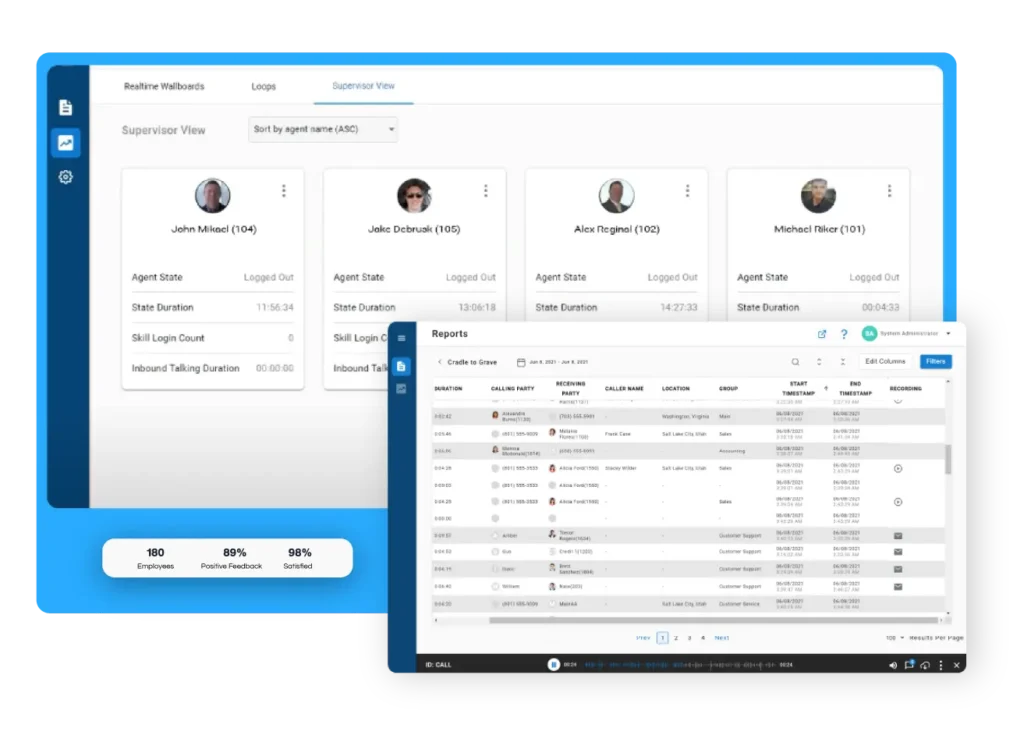
Xima Software combines intelligent routing, AI automation, workforce management, and reporting tools to support more manageable workflows for agents and supervisors.
Intelligent Skills-Based Routing
Not every customer inquiry requires the same level of expertise.
A routine account question may be appropriate for a newer agent, while a complicated technical issue may need someone with specialized training.
Skills-based routing helps direct incoming interactions to agents with the appropriate qualifications.
This can reduce unnecessary transfers and prevent employees from repeatedly handling requests they are not prepared to resolve.
For supervisors, intelligent routing also provides a way to manage workloads more effectively. Instead of manually directing every complicated call, routing rules can help distribute interactions according to the team’s available skills and resources.
Agents spend less time struggling with unfamiliar requests, while customers have a better chance of reaching someone who can help.
AI Voice Bots and Virtual Agents
Answering the same basic questions throughout a shift can become exhausting, especially when those requests account for a large share of incoming volume.
AI voice bots and virtual agents can handle routine inquiries before they reach a live representative.
For example, a customer calling to check business hours, confirm an appointment, or request basic account information may be able to complete the interaction through automation.
Xima’s AI Voice Bot and AI Messaging Bot support these types of customer service workflows, allowing live agents to concentrate on requests that require more attention.
This approach can help boost agent performance with AI-powered cloud software by reducing repetitive work and giving employees more time for meaningful customer interactions.
Automation should still provide a clear path to human assistance when a request becomes too complicated or sensitive for the bot to handle.
AI-Driven Workforce Management (WFM)
Understaffing is a major source of call center stress. When incoming demand exceeds available capacity, agents face longer queues, more frustrated customers, and fewer opportunities to recover between interactions.
Workforce management software helps supervisors plan staffing around expected demand.
Xima’s contact center workforce management software uses historical interaction data, agent availability, and service level targets to support forecasting and scheduling decisions.
Managers can identify periods that may require additional coverage and adjust schedules before workloads become unmanageable.
Workforce management tools also support attendance tracking and real-time adherence monitoring, giving supervisors better visibility into staffing throughout the day.
Where supported by the team’s scheduling configuration, employee self-service and shift-management options can make schedule changes easier to coordinate without creating additional administrative work.
More accurate staffing decisions help agents maintain reasonable workloads while allowing the contact center to meet customer demand.
Real-Time AI Sentiment Analysis
A difficult customer interaction can affect an agent long after the call ends, particularly when the conversation involves hostility, repeated complaints, or an unresolved problem.
AI-powered sentiment analysis helps contact centers identify language and conversational patterns that may indicate customer frustration.
With sentiment analysis, supervisors can gain insight into negative interactions and identify situations that may require additional attention.
When real-time sentiment monitoring and alerts are available, managers can respond to concerning interactions sooner rather than discovering problems during a later call review.
For example, a supervisor who receives an alert about an escalating conversation may be able to provide guidance, assist with the interaction, or arrange a brief recovery period for the agent afterward.
Sentiment analysis is not a perfect measure of customer emotion, and negative sentiment does not always mean a caller is being abusive. Human judgment remains important when deciding whether intervention is necessary.
Used appropriately, these tools can help supervisors support employees during difficult conversations instead of relying entirely on after-call evaluations.
Auto QA and Real-Time Coaching
Traditional quality assurance often requires supervisors to manually review a small sample of recorded calls.
That process takes time and may leave agents feeling that their performance is being judged on a handful of interactions rather than their overall work.
Xima’s AI-powered contact center capabilities include Auto QA, which evaluates customer interactions against defined scoring criteria.
By analyzing a broader range of conversations, supervisors can identify recurring coaching opportunities and assess agent performance more consistently.
This gives managers a stronger foundation for feedback. Instead of focusing on one difficult call, they can review patterns and recognize where an agent is performing well or needs additional support.
Real-time agent assistance can also provide relevant information during active conversations, helping employees respond to unfamiliar questions without constantly searching for answers or requesting supervisor intervention.
Automated scoring still requires appropriate oversight and fair evaluation criteria. When paired with supportive coaching, these tools can make performance management more constructive and reduce the pressure associated with subjective reviews.
Support your team with Xima Software
Call center burnout affects employees, customers, and the overall performance of a contact center. When agents face excessive workloads, difficult interactions, and inefficient systems every day, maintaining consistent service becomes harder.
Xima Software helps small and mid-sized contact centers address these challenges with tools that simplify daily operations.
From skills-based routing and AI-powered automation to workforce management, sentiment analysis, and Auto QA, Xima gives supervisors the visibility they need to manage workloads and support agent development.
Agents benefit from fewer repetitive tasks, clearer workflows, and access to information that helps them resolve customer issues more confidently.
With Xima’s cloud contact center platform and white-glove implementation support, businesses can improve how their teams work without adding unnecessary complexity.
Schedule a personalized demo to see how Xima can help your contact center streamline workflows, support agent performance, and deliver a better customer experience.