What is a Customer Experience Platform and How Does it Work?
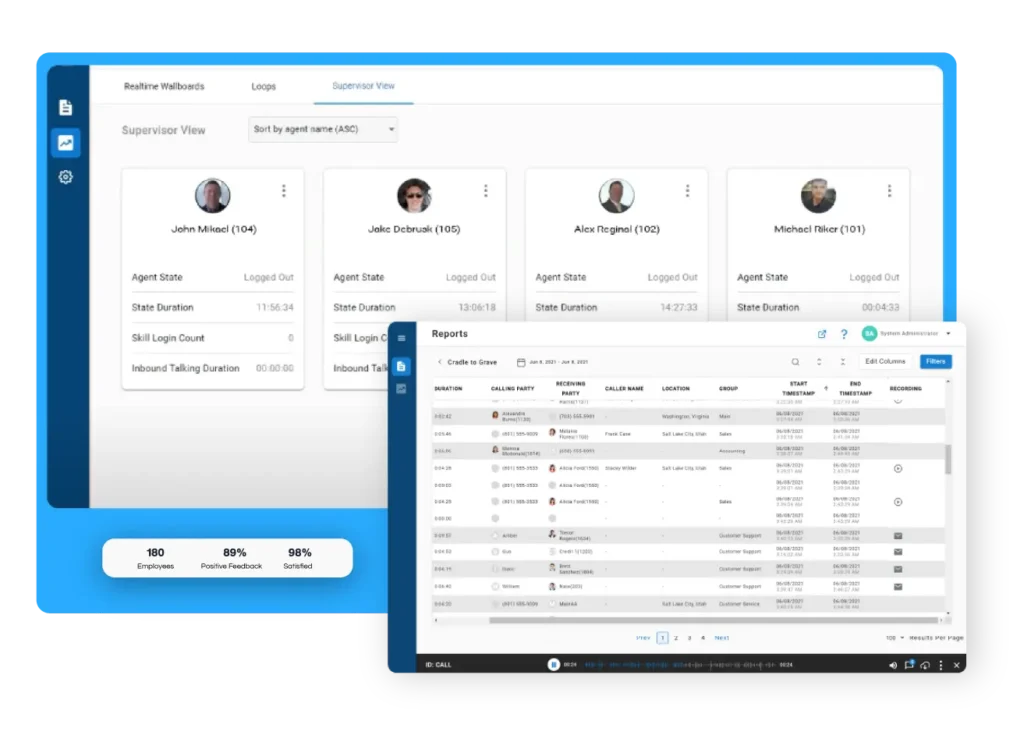
A CX platform (customer experience platform) is a comprehensive solution that connects your phone lines, web chat, SMS, and emails into one central dashboard. Instead of making agents jump between separate screens to answer a call or reply to a text, this software pulls all those communication channels into a single workspace. It acts as a collection hub, gathering customer interaction data from every touchpoint so your team can see a caller’s full history and act on it immediately.
For a busy contact center, a CX platform replaces the mess of using three or four different programs at once. When a customer reaches out, the platform tracks their entire path: from the moment they enter the queue until the agent hangs up the phone or closes the chat window. This gives managers clear, live data on wait times and agent performance while giving teams the tools to handle requests faster.
Key Features of CX Platforms
CX platforms provide the tools businesses need to create data-driven experiences that keep customers engaged and satisfied. From unifying customer data to delivering personalized interactions across multiple channels, these platforms help companies enhance service quality and efficiency. Below are some of the key features that make CX platforms an essential part of any customer experience strategy.
Data Centralization
CX platforms bring all customer data together in one place, creating a unified and comprehensive view of each customer. Instead of scattered information across different systems, businesses get a single source of truth built on data pulled from call history, chat transcripts, CRM records, and other sources. This enables agents to provide faster, more informed support and allows businesses to track customer journeys more effectively.
Analytics and Reporting
CX platforms provide in-depth analytics and reporting tools that give businesses a clear picture of customer behavior, service performance, and key trends. These insights help companies refine their approach, optimize workflows, and continuously improve the overall customer journey.
Personalization
Customers expect experiences that feel tailored to their needs. CX platforms use data and automation to personalize interactions, from recommending relevant solutions to adjusting communication styles based on past preferences. This builds stronger relationships and enhances customer satisfaction.
Omnichannel Routing
Today’s customers move seamlessly between channels—phone, email, chat, social media—and they expect businesses to do the same. CX platforms intelligently route interactions across these channels, ensuring customers connect with the right agent or resource without unnecessary delays.
Designed to manage inbound and outbound communications, contact center platforms ensure customers receive fast, efficient service across multiple channels. These solutions integrate voice, email, chat, and social interactions into a single interface, helping businesses optimize response times and improve customer satisfaction.
Types of CX Management Platforms
Omnichannel Contact Center Platforms
These platforms connect phone calls, live web chat, SMS text, and email lines into one workspace. The software reads data from your databases to automatically route incoming conversations to the specific agent trained to handle that issue.
All-in-One CX Platforms
These systems combine internal employee phone systems with external customer support tools. They record all incoming calls, generate daily performance reports for managers, and track how long buyers wait in line before an agent answers.
Point-Solution Applications
These are standalone tools built to handle a single task rather than a full conversation. Examples include feedback software that only emails post-call surveys, or standalone knowledge base tools that host self-service support articles on a website.
Benefits of a Customer Experience Platform
Lower Customer Churn
Agents fix problems faster when they read a caller’s full history on their screen. Fixing account issues on the first call stops frustrated buyers from canceling their service and leaving for competitors.
Faster Response Times
Chatbots answer basic questions about store hours or return policies instantly. This clears the queue, so your human agents have time to handle complex account issues.
Better Staff Management
Call volume reports show you exactly when your phones ring the most. You use this data to schedule enough staff for peak hours and avoid paying idle agents during slow shifts.
Choosing the Right CX Platform
With so many CX platforms available, selecting the right one comes down to finding a solution that aligns with your business’s specific needs and goals. No matter your industry, the right platform should offer the features and flexibility to support your customer experience strategy now and in the future. Before committing to a CX platform, consider the following:
Business Needs & Goals: Identify the biggest challenges in your customer experience strategy. Are you focused on reducing wait times, improving self-service, or personalizing interactions? Defining your priorities will help narrow down the best-fit platform.
Budget: CX solutions range from basic tools to enterprise-grade platforms with AI-driven capabilities. Understanding your budget—both upfront and long-term—ensures you choose a platform that delivers value without unnecessary costs.
Scalability: As your business grows, so will your customer experience needs. A scalable CX platform should be able to handle increased volumes, expand to new channels, and adapt to evolving customer expectations.
Ease of Use: A platform that requires excessive training or constant IT support can slow down adoption. Look for an intuitive, user-friendly interface that allows agents and managers to quickly leverage its full capabilities.
Vendor Support & Integration: Seamless integration with existing tools, including CRMs and contact center software, is essential for maintaining smooth operations. Additionally, strong vendor support ensures ongoing updates, troubleshooting, and best-practice guidance.
The Growing Role of AI in CX Platforms
AI is a driving force behind the evolution of modern CX platforms. In fact, Gartner predicts that by 2026, generative AI will power 80% of customer service interactions. AI-driven capabilities allow businesses to streamline interactions, provide real-time insights, and personalize experiences at an unprecedented scale. When evaluating a CX platform, consider the following AI-driven capabilities:
Natural Language Processing (NLP): Enables chatbots and virtual assistants to understand and respond to customer inquiries naturally, improving self-service options.
Machine Learning: Continuously learns from past interactions to optimize workflows, improve response accuracy, and suggest relevant solutions.
Predictive Analytics: Anticipates customer needs by analyzing historical data, allowing businesses to proactively address issues and tailor experiences.
Sentiment Analysis: Detects customer emotions in real-time by analyzing language, tone, and context, enabling businesses to identify dissatisfied customers early and take corrective action.
Automated Call Routing: Uses AI to analyze caller intent and direct customers to the right agent or department, reducing wait times and improving first-call resolution rates.
For example, an AI-powered CX platform could detect a frustrated tone in a customer’s voice during a chatbot interaction and escalate the conversation to a live agent before frustration turns into churn. By leveraging these AI-driven tools, businesses can deliver faster, smarter, and more personalized customer experiences.
Elevate Customer Experience with CX Platforms
Ready to see how a powerful CX platform can transform your customer interactions? Book a demo today to explore Xima’s contact center solutions and discover how AI-driven automation, intelligent routing, and real-time analytics can take your customer experience to the next level.
More To Explore
FAQs About CX Platforms
How does a CX platform work?
It connects your phone lines, email addresses, and website chat boxes so they all appear on one dashboard. When a customer calls or messages your business, the software looks up their name and past interaction logs. It then follows your routing rules to send that active conversation to the agent dashboard of the employee assigned to handle that account.
How do different industries use CX software?
Retail and E-commerce: Store owners use it to track delivery updates and send automated tracking numbers to buyers before they call to ask about a late package.
Finance and Insurance: Banks route urgent fraud alerts to live agents immediately while sending routine balance checks to automated phone menus.
Healthcare: Clinics send automated text reminders for upcoming appointments and give patients a secure chat portal to message the front desk.
How does a CX platform differ from a CRM?
A CRM acts as a database that stores contact files, sales notes, and purchase records. A CX platform manages active communication lines like live phone calls, text messages, and web chats. Instead of replacing your CRM, the CX platform connects directly to it so your agents can view a caller’s account details on their screen while speaking with them.
High call volumes, long hold times, and repetitive customer questions put constant pressure on contact center teams. Agents can burn out answering the same routine inquiries, while customers may abandon calls before receiving help. Simply hiring more agents to handle basic requests is expensive, and traditional IVR phone trees often route customers without actually resolving their needs.
To provide the best experiences, we use technologies like cookies to store and/or access device information. Consenting to these technologies will allow us to process data such as browsing behavior or unique IDs on this site. Not consenting or withdrawing consent, may adversely affect certain features and functions.
Functional
Always active
The technical storage or access is strictly necessary for the legitimate purpose of enabling the use of a specific service explicitly requested by the subscriber or user, or for the sole purpose of carrying out the transmission of a communication over an electronic communications network.
Preferences
The technical storage or access is necessary for the legitimate purpose of storing preferences that are not requested by the subscriber or user.
Statistics
The technical storage or access that is used exclusively for statistical purposes.The technical storage or access that is used exclusively for anonymous statistical purposes. Without a subpoena, voluntary compliance on the part of your Internet Service Provider, or additional records from a third party, information stored or retrieved for this purpose alone cannot usually be used to identify you.
Marketing
The technical storage or access is required to create user profiles to send advertising, or to track the user on a website or across several websites for similar marketing purposes.