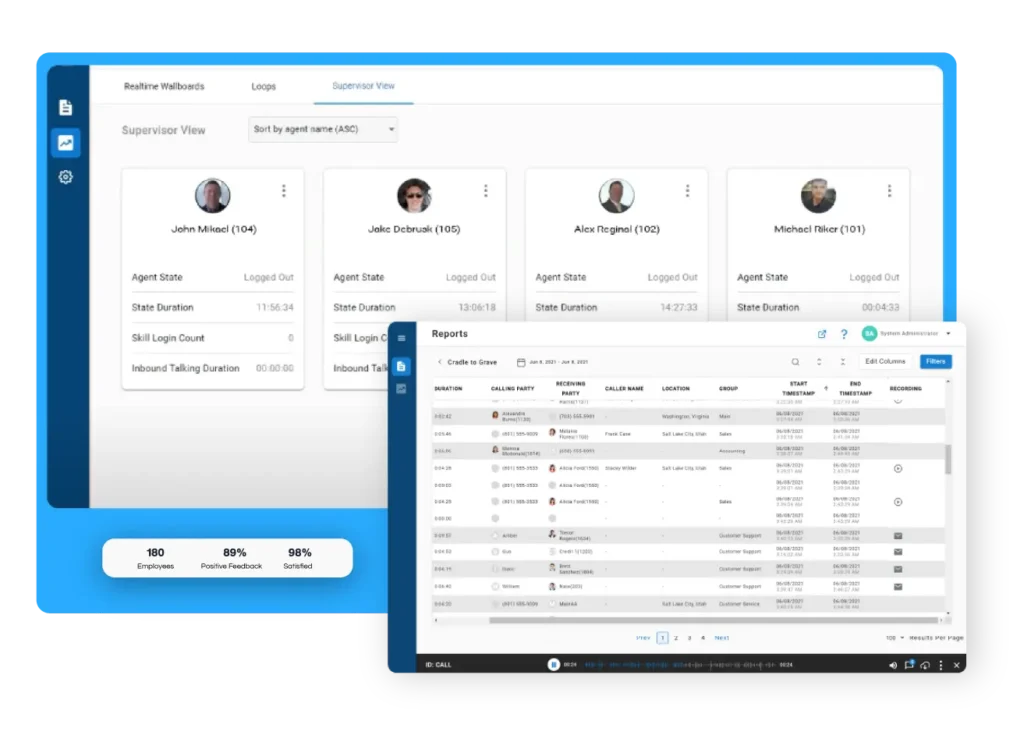
Call Center Software for Transporation

Transportation Call Center Software Built for Every Call That Can't Wait

Whether it’s a rider, a stranded driver, or a technician tracking down a part, every caller needs an answer now.

Transportation call centers connect people to the resource they need, fast: a bus, a tow truck, a replacement part. Xima gives your team the tools to triage calls quickly, keep every channel in sync, and deliver accurate, real-time answers to the people counting on you.

The Cost of an Answer That Comes Too Late

A rider stranded at a stop, a driver waiting on the shoulder, a technician with a grounded aircraft: every one of these calls is time-sensitive, and every unanswered ring chips away at trust in your service. Whether you’re coordinating a fleet, a vendor network, or a parts inventory, your contact center is often the first place, and sometimes the only place, people turn to when something isn’t going as planned.

Faster Triage for Time-Sensitive Calls

Real-Time Status Across Every Channel

Fewer Repeat Calls, More First-Call Answers

AI-Powered Solutions for Transporation

Xima’s contact center software uses AI to help your team move faster on every call, whether you’re dispatching a vehicle, coordinating a vendor network, or checking parts inventory. AI-powered self-service handles routine status and schedule questions without tying up a live agent, so your team can stay focused on urgent or complex calls. Screen pops surface the account, route, or order details your agent needs the moment a call comes in. Speech analytics flags service disruptions and recurring complaints in real time, so supervisors can step in before a delay becomes a lost customer.

Keep Every Channel in Sync

Riders, drivers, and customers don’t all reach out the same way, especially when something has gone wrong. Xima helps you meet them on voice, chat, email, and SMS, backed by the same real-time data across every channel.

Voice

On-demand voice support connects callers to the right agent immediately, whether they’re reporting a breakdown, asking about a delayed route, or checking on an order.

Web Chat

Let customers check status, ask questions, or get quick answers through fast, encrypted chat, without adding to your phone queue.

Email

Automated confirmations, updates, and follow-ups keep customers and partners informed without extra work for your team.

SMS

Send real-time delay alerts, ETA updates, or order status by text, the channel most customers prefer for time-sensitive updates.

81%

of public transit riders say real-time arrival information is important to their experience, and the same expectation carries over to every transportation-adjacent call: people want to know where things stand, right now.

Source: U.S. DOT ITS Joint Program Office market research, Arlington County, VA, 2020.

Built to Protect Safe & Reliable Service

Protect sensitive customer, account, and vendor data while giving your team the audit trail they need for safety and service disputes. Xima holds SOC 2 certification, and pause-and-resume call recording, along with automated redaction, gives agents an easy way to protect payment or account details mid-call.

Pause recording during payment or account verification, then resume automatically.

Centralized authentication reduces the risk of lost or recycled passwords, keeping unauthorized users out of dispatch and account systems.

Flag missed safety disclosures or service protocol deviations so supervisors can catch issues immediately, not after a complaint.

Our Transporation Call Center Features

Give callers the option to wait or receive a callback instead of holding during service disruptions or high-volume events.

Give callers the option to wait or receive a callback instead of holding during service disruptions or high-volume events.

Real-time, secure recording of every call gives supervisors the insight they need to coach agents and resolve disputes fast.

Let customers check route, order, or service status without waiting for an agent, especially useful during high-volume periods.
See every interaction, across every channel, in a single searchable window, from first contact to resolution.
Monitor queue volume and agent status live, and catch a spike in disruption-related calls before it becomes a backlog.
Understand recurring complaints, flag compliance or safety risks, and spot patterns behind repeat calls.

Customer Service is our Focus

“Xima’s Auto QA feature gives us a way to catch what’s working and what’s not, without needing a team of report experts to find it. As we’ve gone through changes on our own QA side, that kind of visibility has been a real asset.”

– Director of Software Engineering for a Large Sub Haul Coordinator

Transporation Customer Service Software FAQs

What is transportation call center software?
Transportation call center software is the system your dispatchers, CSRs, and coordinators use to handle every call, chat, text, and email tied to getting people, vehicles, or parts where they need to be. It connects your team to real-time status information, whether that’s a bus route, a tow truck’s ETA, or a parts order, so calls get resolved fast instead of turning into a hold-and-transfer loop.
What are the best call center features for transportation and dispatch organizations?
The features that matter most are the ones built for time-sensitive, high-volume calls: call queuing and callback options, so callers aren’t stuck holding during a service disruption; real-time wallboards so supervisors see a spike in calls before it becomes a backlog; and speech analytics to flag safety-script deviations or recurring complaints. SMS is essential too, since it’s the channel most people prefer for real-time delay and status alerts.
How much does transportation call center software cost?
Pricing depends on the number of agents, the channels you need (voice, chat, email, SMS), and the features your team relies on, such as speech analytics or workforce management. Xima’s basic and advanced features are available at a fraction of the cost of enterprise competitors, so you’re not paying for capabilities you don’t use.
How does call center software benefit transit agencies and dispatch coordinators?
It reduces the volume of routine status calls, since much of that can be handled through self-service and proactive alerts, and it gives agents the account, route, or order context they need the moment a call comes in. That means less time spent asking callers to repeat themselves and faster resolution on the calls that actually need a live person, especially during a service disruption or emergency.
What types of transportation organizations should use call center software?
Any organization where a contact center connects people to a time-sensitive resource benefits: public transit agencies, dispatch coordinators for towing and roadside services, and parts or equipment distributors serving transportation and aviation sectors. If your team fields calls about routes, ETAs, breakdowns, or order status, this is built for you.
How do I integrate call center software with my dispatch or scheduling system?
Xima connects to dispatch, scheduling, or order management systems via APIs, webhooks, and screen pop technology, so agent-facing data such as route status, vendor assignments, or order details appears automatically when a call comes in. Your implementation team can walk through your specific system during setup to confirm what’s supported.
Can Xima handle high call volume during service disruptions or emergencies?
Yes. Call queuing and callback options keep callers from abandoning calls during a route change, breakdown, or emergency event, and real-time wallboards let supervisors see a volume spike coming and adjust staffing before it turns into a backlog. Cloud-based scaling also means you’re not limited by on-premises capacity during your busiest or most disruptive periods.
Does Xima support SMS for appointment and arrival notifications?

Yes. SMS is fully supported and centrally managed within the platform, so your team can send delay alerts, ETA updates, or order status without relying on personal devices or a separate texting tool.

Is Xima suitable for transit agencies, dispatch coordinators, and parts providers?

Yes. Xima already supports organizations across this range, including a public transit agency, a national dispatch coordinator for roadside and towing services, and an aviation parts manufacturer and distributor. The same tools that support high call volume and real-time status communication apply across all three.


Are Xima's services cloud-based or on-site?

Xima offers both. The cloud-based Contact Center as a Service (CCaaS) platform is the most common choice for transportation organizations that need flexibility and remote access for distributed teams, but an on-premises option is available for businesses with specific infrastructure requirements.

Xima Contact Center

Try Xima yourself. Schedule a demo today.

See how Xima AI contact center software supports better QA, stronger analytics, and faster coaching.

Fill out the form below and a team member will reach out to walk you through it!

Feature Release Webinar

Join us for an exclusive webinar as we dive into our latest product releases for IVR, MMS Messaging, and our Social Media Integration.

  • IVR (Interactive Voice Response)

  • MMS Messaging

  • Social Media Integration

Thursday, September 12, 2024 | 11:00AM ET