These tools have become increasingly common in customer service, IT support, and internal helpdesks. For small and mid-sized contact centers, they offer a practical way to manage growing interaction volumes without putting more pressure on an already busy team.
The biggest benefits of using AI chatbots fall into three areas: improving the customer experience, reducing business costs, and helping live agents work more efficiently. When connected to the right systems, chatbots can also provide useful information about customer needs, recurring problems, and support performance.
Benefits of AI Chatbots for Customers
Customers want answers without unnecessary delays. Whether they are checking an order, updating an appointment, or asking about a service, they expect support to be easy to access.
AI chatbots help businesses meet those expectations by providing immediate assistance and making routine requests easier to resolve.
24/7 Support Availability
Customer questions do not stop when the contact center closes. Someone might need to check an order late at night, confirm an appointment over the weekend, or find information before the next business day.
AI chatbots provide round-the-clock support for requests they are equipped to handle. Customers can receive answers to common questions, access account information through approved integrations, or begin a support request without waiting for regular business hours.
For smaller contact centers, this extends service availability without requiring agents to work overnight shifts.
Faster Response Times
Long wait times can turn a simple question into a frustrating experience. When every inquiry enters the same support queue, customers with straightforward requests may spend several minutes waiting for an answer that takes only seconds to provide.
AI chatbots can acknowledge incoming messages immediately and respond to common questions without placing customers in a live queue.
A customer asking about a return policy, for example, can receive the relevant information right away. That leaves agents available for requests that require more attention and can help improve customer satisfaction (CSAT) and first-contact resolution.
Frictionless Self-Service
Many customers would rather solve a simple problem themselves than contact support.
AI chatbots make self-service more accessible by understanding questions written in everyday language. Instead of searching through several help center pages, customers can explain what they need and receive a relevant answer or next step.
A chatbot might provide a tracking link, explain how to reset a password, or direct someone to the appropriate account setting. When connected to approved business systems, it may also complete certain tasks within the conversation.
The goal is to help customers resolve supported requests with as little effort as possible.
Consistent Support Across Channels
Customers frequently move between websites, mobile applications, and messaging platforms when communicating with businesses. They expect the information they receive to remain consistent regardless of where the conversation begins.
AI chatbots can support this experience by drawing responses from shared knowledge sources and connecting with other customer service systems.
When the necessary integrations are in place, conversation history can follow customers between supported channels. Someone who starts a request through website chat and later speaks with an agent should not have to explain the entire issue again.
This consistency can reduce customer effort and give supervisors a clearer view of interactions across the contact center.
Personalized Interactions
Generic automated responses are not always helpful, especially when customers have questions about existing orders or accounts.
AI chatbots connected to customer relationship management (CRM) systems can use relevant account information to tailor their responses. Depending on the integration, they may recognize returning customers, reference previous purchases, or provide updates about an existing request.
For example, a customer asking about a delayed shipment could receive information about their specific order instead of general shipping policies.
Personalization works best when customer information is accurate, access is properly controlled, and the chatbot has enough context to provide a useful response.
Benefits of AI Chatbots for Businesses
For contact center leaders, the value of chatbot automation extends beyond faster responses. It also affects staffing requirements, operating costs, customer insights, and the ability to maintain service levels as demand changes.
Lower Operational Costs
Labor is one of the largest expenses associated with running a contact center. As interaction volumes increase, businesses often respond by hiring additional agents, extending shifts, or paying overtime.
AI chatbots can reduce some of that pressure by handling repetitive inquiries before they reach the live team.
Xima’s AI Messaging Bot can answer routine customer questions using approved company information, allowing agents to concentrate on more complicated requests.
Automating these interactions can lower cost per contact and help businesses manage demand without increasing staffing at the same rate. The savings depend on how many requests the chatbot successfully resolves and the cost of operating the technology.
Scalability During Peak Volumes
Holiday shopping periods, promotional events, product launches, and unexpected service disruptions can cause support volumes to increase quickly.
Hiring temporary employees for every spike is not always practical. Recruiting, training, and scheduling additional agents takes time, and demand may return to normal before those resources are fully needed.
AI chatbots can handle many simultaneous conversations, helping businesses absorb higher volumes of routine requests without a proportional increase in staffing.
For example, an online retailer receiving thousands of order-status questions during a holiday sale can automate many of those inquiries while its live agents focus on delivery problems, refunds, and more complicated customer concerns.
The actual number of conversations a chatbot can support depends on the platform’s capacity and configuration.
Leveling the Playing Field for SMBs
Large companies often have dedicated customer service departments, extended support hours, and specialized teams for different types of requests. Smaller businesses may rely on a handful of employees to handle those same responsibilities.
AI chatbots give SMBs a way to provide some of those capabilities without building a large support operation.
Through AI agents for SMBs, businesses can automate common questions, support customers outside regular hours, and connect routine requests to existing workflows.
A small team can maintain more consistent availability while reserving its employees’ time for issues that require personal attention. That makes it easier to compete on service responsiveness without taking on the staffing costs of a much larger organization.
First-Party Data Collection
Customer conversations contain useful information about purchasing decisions, service problems, and frequently requested features.
AI chatbots can collect first-party data directly from these interactions, including contact details, customer preferences, product interests, and feedback, when customers provide that information.
For example, a chatbot assisting someone with a product question might collect their preferred specifications or identify which features matter most to them.
With appropriate consent and data handling practices, businesses can use this information to improve customer service, refine marketing campaigns, and identify gaps in their products or services.
This provides another source of customer insight without relying exclusively on third-party cookies or external audience data.
Increased Sales and Conversions
Not every chatbot conversation begins with a support problem. Some customers need help deciding whether to make a purchase.
AI chatbots can act as automated sales assistants by answering product questions, explaining available options, and collecting information from interested prospects.
A customer comparing software plans, for example, might ask about features, pricing, or compatibility. The chatbot can provide approved information and help determine whether the prospect should speak with a sales representative.
Depending on the connected systems, chatbots can also recommend relevant products, support checkout workflows, and assist with lead qualification.
Faster answers can reduce the chances of a potential customer leaving simply because they could not find the information needed to make a decision.
Proactive Customer Notifications
Customer service becomes more efficient when businesses can answer questions before customers need to ask them.
AI chatbots connected to messaging and business systems can support proactive notifications about upcoming appointments, order updates, delivery changes, and other time-sensitive information.
Unlike a one-way notification, a conversational message can allow customers to respond with questions or request changes.
For example, a customer receiving an appointment reminder might ask to reschedule. With the appropriate scheduling integration, the chatbot could guide that request through an approved workflow.
These interactions can reduce avoidable inbound contacts while giving customers a convenient way to manage routine updates.
Early Churn Detection
Customers do not always announce that they are considering leaving a business. Frustration may first appear through repeated support requests, unresolved issues, or negative language during conversations.
AI-powered sentiment analysis can help identify some of these warning signs.
A chatbot may recognize expressions of dissatisfaction or repeated requests for assistance and flag the interaction for additional attention. When connected to customer records and reporting tools, these signals can help teams identify accounts that may need follow-up.
Sentiment alone cannot reliably predict whether someone will cancel. However, it can give supervisors another way to prioritize potentially difficult interactions before problems become more serious.
Faster Support Staff Onboarding
New contact center agents have a lot to learn. Product details, account procedures, return policies, troubleshooting steps, and internal processes can take weeks to become familiar.
When AI chatbots handle common questions, new employees can spend more of their training time learning how to manage complex conversations and use the systems that support them.
Agents still need to understand company policies and know how to handle routine requests when automation cannot resolve them. However, reducing the volume of repetitive inquiries can make the initial workload more manageable.
For smaller contact centers with limited training resources, that can help new hires build confidence while supervisors focus on developing their skills.
Benefits of AI Chatbots for Live Agents
Customer-facing automation also changes what happens behind the scenes. When chatbots handle routine requests effectively, live agents have more time to investigate problems, work with customers, and provide the kind of support that cannot be reduced to a scripted answer.
Automating Repetitive Tasks
An agent might answer the same question about store hours, shipping updates, or password resets dozens of times during a shift.
Those conversations are necessary, but they leave less time for customers dealing with unusual or complicated problems.
AI-powered virtual agents can take on many of these repetitive requests through automated conversations and approved workflows.
For live agents, that means fewer interruptions from predictable questions and more time for issues that require investigation, judgment, or empathy.
Streamlined Issue Escalation
A chatbot will not be able to resolve every customer request. Some issues involve exceptions, sensitive information, or situations that require a live representative.
A well-designed escalation process recognizes when automation has reached its limits.
Before transferring the interaction, the chatbot can collect the reason for contact, relevant account details, and a summary of what has already been discussed. That information can then be passed to the appropriate agent when the systems support contextual handoffs.
The agent begins with a clearer understanding of the issue, while the customer avoids repeating information already provided.
This can reduce unnecessary transfers and help improve first-contact resolution.
Reduced Ticket Backlogs
Support backlogs often grow because routine requests compete with complicated cases for the same limited agent time.
When chatbots resolve suitable tier-one inquiries, fewer tickets need to enter the live queue.
Consider a software company receiving a steady stream of password reset requests alongside technical support issues. Automating the reset process gives agents more time to investigate software errors and other problems that require deeper troubleshooting.
This can help reduce ticket accumulation, improve response times, and give employees enough time to resolve difficult cases properly.
Supervisors should still monitor chatbot containment and escalation rates to make sure requests are being resolved rather than simply delayed.
Lower Stress and Burnout
Contact center work can be demanding, especially when agents face long queues, repetitive questions, and customers who have already spent too much time waiting.
Reducing avoidable contacts can make the workload easier to manage.
AI chatbots handle routine interactions, while agents remain responsible for situations that benefit from human communication and problem-solving. This balance is central to effective AI and human collaboration in contact centers.
Automation does not eliminate the challenges of customer service. Agents may still handle difficult conversations, and the requests reaching them may become more complex. However, removing repetitive work and improving handoffs can give employees more time and context to do their jobs well.
Industry-Specific Chatbot Benefits
The benefits of AI chatbots vary depending on the types of questions customers ask and the systems a business uses. The strongest applications usually address a recurring communication problem that employees are already spending time managing.
- Retail and eCommerce: Chatbots can answer product questions, explain return policies, provide shipping updates, and recommend relevant products. During busy shopping periods, they can reduce the number of routine requests entering customer service queues.
- Healthcare: Medical offices and healthcare organizations can use chatbots to assist with appointment scheduling, office hours, billing questions, and administrative requests. The benefits of chatbots in healthcare are particularly relevant for teams managing high patient communication volumes. Sensitive medical questions should remain subject to appropriate privacy controls and escalation procedures.
- Logistics and Transportation: Customers frequently contact logistics providers about shipment locations, delivery estimates, and delays. Chatbots connected to tracking systems can provide current shipment information and help customers understand the next steps when a delivery changes.
- Banking and Financial Services: Financial institutions can use authenticated chatbot workflows to help customers check account balances, review transaction histories, and get answers to routine account questions. Strong identity verification, access controls, and compliance safeguards are essential when handling financial information.
- Manufacturing: Manufacturers often receive repeated inquiries about order status, warranties, replacement parts, and technical documentation. Customer service automation in manufacturing can help connect these requests to the appropriate information or department, reducing the time employees spend tracking down routine updates.
Across these industries, the value comes from matching automation to actual customer needs. A retailer may prioritize order tracking, while a healthcare provider focuses on appointment communication. The technology should support the workflows that matter most to each operation.
Implement AI Chatbots with Xima Software
Xima Software helps small and mid-sized contact centers manage customer interactions with AI-powered automation, intelligent routing, and reporting built into its cloud contact center platform.
Xima’s AI Messaging Bot can handle routine customer inquiries using company-specific information. Businesses can train the bot with approved website content, PDFs, and internal knowledge resources, helping it provide responses that reflect their policies and services.
For organizations that need more advanced automation, Xima also supports custom actions such as sending emails, logging tickets, and querying CRM databases. These capabilities allow the Messaging Bot to do more than provide basic answers when the appropriate integrations are configured.
Xima’s AI Voice Bot extends automated assistance to incoming calls, while intelligent routing helps connect customers with live agents when their requests need additional attention.
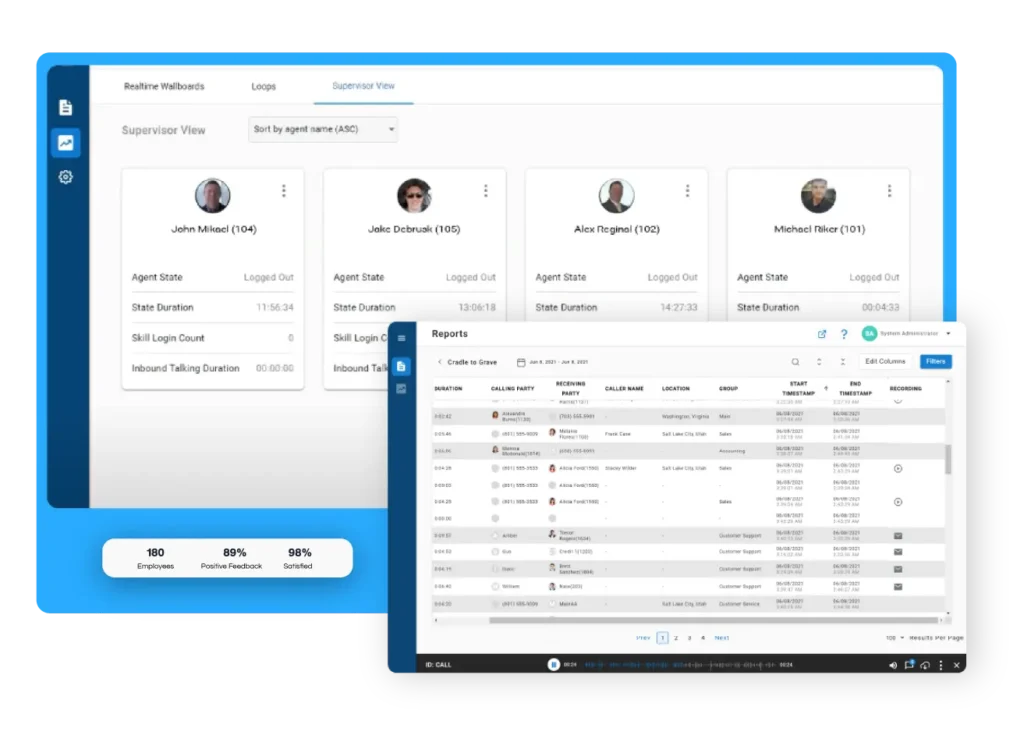
Supervisors also gain access to reporting and analytics that help them understand interaction volumes, agent performance, and the effectiveness of their contact center operations.
With Xima, businesses can introduce automation while keeping customer service, live agents, and performance visibility connected.
Ready to see how AI chatbots could improve your contact center? Schedule a personalized demo with Xima Software to explore the automation and reporting capabilities that fit your team’s needs.