Customer service contact centers are shifting from human-only teams to hybrid models that combine AI chatbots with human agents. Bots can handle routine questions quickly, while agents bring empathy, judgment, and problem-solving skills to more nuanced conversations.
However, challenges can arise when determining where each belongs across voice, chat, email, SMS, and social channels based on the complexity and context of a customer’s request. This guide breaks down where to deploy AI chatbots versus human agents, with channel-specific guidance to help create a more efficient, connected customer experience.
The Difference Between Chatbots and Human Agents
AI chatbots and human agents each play an important role in a modern customer service strategy. The right choice depends on the customer’s need, the channel, and the level of judgment required to resolve the interaction.
Decision Factor | AI Chatbots | Human Agents |
Speed | Delivers immediate responses to common requests | Response time depends on availability and queue volume |
Emotional complexity | Best for low-stakes, straightforward interactions | Handles sensitive, frustrated, or emotionally charged conversations |
Inquiry volume | Scales easily to manage high volumes at once | Limited by staffing capacity |
Cost per interaction | Helps reduce costs for routine requests | Requires a higher investment per interaction |
Resolution scope | Resolves clear, repeatable questions with defined answers | Solves complex, multi-step, or exception-based issues |
When to Rely on Automation
Automation is a strong fit for high-volume requests that have clear, factual answers and require little emotional context. AI chatbots can provide instant support around the clock, helping customers check order statuses, reset passwords, find store hours, review account information, or navigate common policies.
Because bots follow the same workflow every time, they can deliver consistent answers across a large number of interactions. This helps reduce wait times, ease pressure on service teams, and give customers a faster path to simple resolutions. Virtual agents in AI can also guide customers through structured processes, collect initial details, and route more complex requests to the right team.
When Human Intervention is Necessary
AI has operational limits. Some customer interactions require context, discretion, and the ability to recognize what is not being said. Human agents are essential when a customer is upset, a situation involves several connected issues, or the right next step falls outside a defined workflow.
Human support is particularly valuable for billing disputes, retention conversations, escalations, sensitive account concerns, and other high-stakes commercial interactions. An experienced agent can ask follow-up questions, evaluate the full situation, make informed decisions, and adjust their approach in real time. That flexibility helps customers feel heard while giving organizations a better opportunity to resolve difficult issues with care.
Phone Support
Phone support often carries the highest emotional weight and cost per interaction. Customers typically choose voice when they need immediate help, are unable to resolve an issue through self-service, or want reassurance from a real person. That makes the phone channel an important place to balance efficient automation with timely human support.
When to Use Voice Bots
Voice bots and IVR menus are a good fit for simple, predictable requests. They can share an account balance, confirm business hours, provide order updates, take a payment, or direct a caller to the right department based on what they say.
These interactions do not require an agent’s time, but they still need to be quick and easy for the customer. AI can also gather information before a transfer, so agents have the context they need when a caller does need help. Learn more about Xima’s AI contact center capabilities and Xima’s virtual agent.
When to Use Human Agents
Human agents should handle calls that involve sensitive information, complex decisions, or a frustrated customer. Billing disputes, medical questions, service problems, and retention conversations all require more than a scripted response.
An agent can listen, ask the right questions, and respond to the customer’s specific situation. That level of care matters when the customer is upset, confused, or facing an issue with real consequences.
Live Chat Support
Live chat is where bots and agents can work especially well together. Customers expect a fast response, but they also need a clear path to a person when the issue goes beyond a simple question.
When to Use Chatbots
Chatbots are ideal for common requests that have a clear answer. They can help customers track an order, reset a password, find an article in the knowledge base, or check a policy without waiting for an agent.
For support teams, that means fewer repetitive chats and more time for issues that need real investigation. For customers, it means quick answers at any time of day.
When to Use Human Agents
A bot should hand the conversation to an agent when the customer needs help with a specific account, a technical problem, or an issue that has not been solved after a few steps. Negative language, repeated questions, and requests for an exception are also signs that it is time to transfer the chat.
The handoff should be immediate and include the chat history. Customers should not have to start over after they have already explained the problem.
Email Support
Email gives customers more space to explain an issue, and it gives support teams more time to investigate. That makes accuracy especially important.
When to Use Email AI
AI can make the email queue easier to manage. It can sort messages by topic, flag urgent issues, route tickets to the right team, and create response drafts using past conversations and approved content. These tools can help agents move through routine emails faster while keeping responses consistent.
When to Use Human Agents
Agents should review and send responses when an issue is complex, account-specific, or high-stakes. This is particularly important for B2B requests, billing questions, technical problems, and multi-step customer concerns.
A person can verify the details, adjust the tone, and make sure the response fully addresses what the customer is asking. AI can speed up the process, but it should not replace judgment.
Social Media Support
Social support happens in public, which raises the stakes for every response. A quick answer can build trust, while a careless one can make an issue more visible.
When to Use Social Media Bots
Bots can help monitor brand mentions, send an immediate acknowledgment, and answer simple direct messages about business hours, locations, and standard policies. They can also flag posts that need a response from the support team. This gives customers a timely response while helping teams keep up with activity across multiple platforms.
When to Use Human Agents
A human should respond to angry public comments, sensitive issues, and complaints that could affect the brand’s reputation. The goal is to acknowledge the concern, show the customer they are being taken seriously, and move the conversation to a private channel when personal details are involved. A thoughtful human response can calm a tense exchange and create a better outcome for both the customer and the brand.
How to Implement a Hybrid Customer Service Model
A hybrid customer service model in contact centers combines the speed of AI with the judgment of human agents. Bots handle routine, high-volume requests, while agents step in when a customer needs more context, flexibility, or care. Together, they can create a support experience that is faster for customers and more efficient for the team.
In practice, the bot handles the first touch. It can answer common questions, collect basic details, identify the customer’s intent, and guide them through simple self-service steps. When the issue becomes more complex, the system escalates the conversation to a human agent.
The handoff is where the model succeeds or fails. The agent should receive the full conversation history, along with any details the bot collected, so the customer does not have to repeat themselves. That continuity gives agents the information they need to resolve the issue quickly, and it makes the transition feel like one connected support experience rather than a restart.
Build a Unified Omnichannel Strategy with Xima Software
A successful hybrid service strategy needs a centralized contact center platform that connects customer data, manages routing, and preserves the context of every interaction across every channel.
Xima Software helps teams put that strategy into action. AI can handle routine requests, identify intent, and route customers to the right resource. When an issue needs human support, agents receive the information already gathered, including the customer’s conversation history and relevant account details.
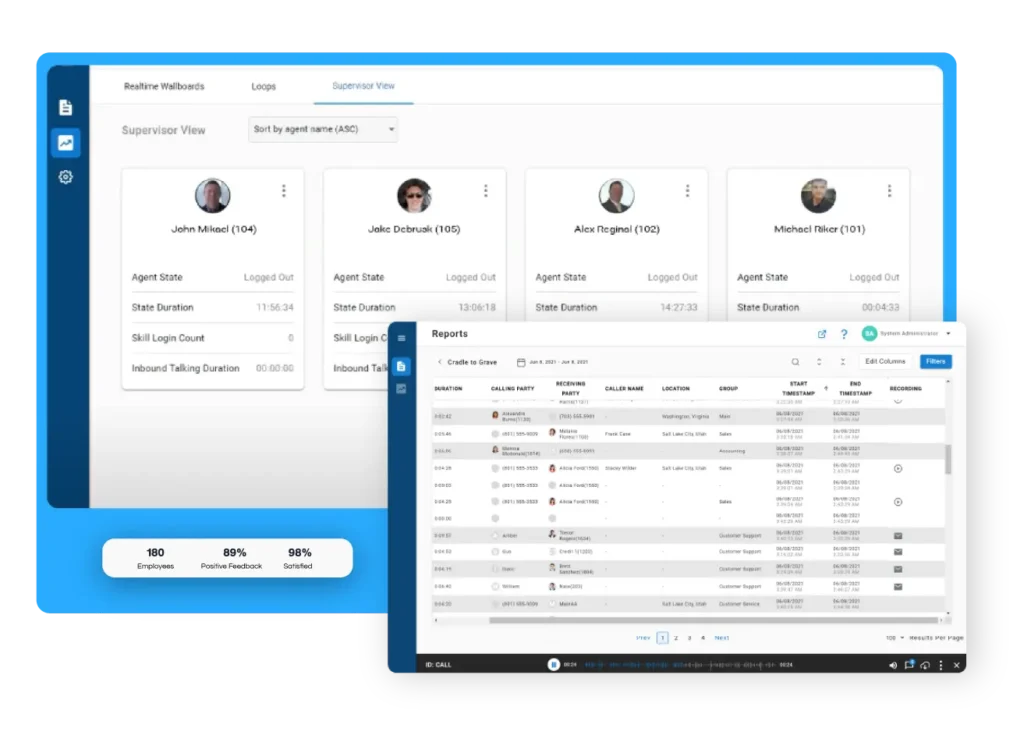
That context makes handoffs smoother, reduces repeated questions, and helps agents focus on resolving the issue instead of piecing together the customer’s story. It also gives teams a clearer view of customer conversations across phone, chat, email, and social media.
Book a demo with Xima Software to see how a unified contact center can help your team deliver faster, more connected customer service.
FAQs About AI Chatbots vs Human Agents
Can AI completely replace human customer service agents?
No, AI cannot completely replace human agents. It can handle routine, high-volume requests, but human agents are still needed for complex issues, sensitive conversations, and situations that require empathy or judgment. The strongest approach uses AI to support agents and make customer service faster.
How do I know if my chatbot is escalating too many tickets?
Review escalation rates alongside customer satisfaction, first-contact resolution, and the types of requests being transferred. A high escalation rate may mean the bot lacks the right information, cannot recognize customer intent, or is not handling common requests effectively.
What is the cost difference between bots and human agents?
Bots generally cost less per interaction because they can manage many routine conversations at the same time without adding staff. Human agents cost more because each interaction requires their time and expertise, but they are essential for issues that automation cannot resolve. A hybrid model helps reduce the cost of simple interactions while protecting the quality of complex support.
How can I seamlessly transfer customers from bots to human agents?
Pass the full conversation history, customer details, and information collected by the bot directly to the agent. The agent should be able to see what the customer asked, what steps the bot took, and why the interaction was escalated. This prevents customers from repeating themselves and makes the handoff feel like one continuous conversation.